|
Edison Phonograph Special Options
by David Lundin
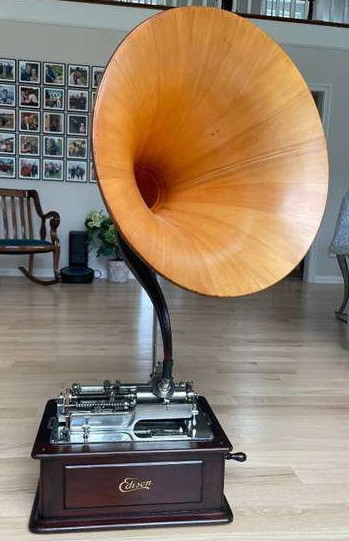
Nickel Plated Edison Triumph B with mahogany case
and Spruce Music Master Horn.
The David Lundin Collection
|
|
Many enthusiastic collectors have scoured their
searching grounds far and wide for unusual and elusive machines and related accessories to add to their
growing collections. For myself, I have always been intrigued with Edison cylinder machines such as the
Gem, Standard, Home, Spring Motor, and Triumph with
special factory or dealer/aftermarket upgrades. Factory
options were offered at an additional premium to the
base price of a phonograph and often advertised in a
catalog or
on a price
list. This
included
options
such as
mahogany
cabinets,
special
plating in
nickel or
gold, factory painted decorations, and
spruce or
mother of
pearl inlaid Music
Master
horns. As
technology
advanced,
additional
options
from the
factory,
from the
dealer,
and from
other aftermarket sources were available across the
expanding industry. These allowed owners to upgrade
an existing phonograph to the latest technology or newest fashion. These included Edison combination attachments, repeaters, horn cranes, horns, and other accessories. Companies such as Hawthorne and Sheble and
the Tea Tray Manufacturing company were examples of
firms which offered an immense variety of aftermarket
options for phonograph owners.
The first mention of a mahogany option from the Edison factory, as an example, was publicized in the June
1904 issue of the Edison Phonograph Monthly. That
being said, specially decorated phonographs as early
as the Edison Spring Motor could be ordered from
1893 in gold ($50) or nickel ($25) hardware, but very
few such Spring Motors are known today. The Triumph,
the successor to the Spring Motor, was offered with a
special decoration option (applied flowers, extra striping, etc.) for $8, nickel plating for $25, gold plating for
$50, and/or a mahogany cabinet for $10 additional
cost. These options added a lot of expense. As an example, the base cost for a Model B Triumph when introduced in 1906 was $50. For the machine pictured
from my collection (Triumph Model B circa 1907), it
would have cost $50 for the machine, plus $25 for the
nickel plating, and $10 for the mahogany cabinet. Later upgrades would have cost $15 for the special
spruce horn, $7 for the 2/4 combination kit and reproducer, and $7.50 for the model D repeater. This would
have brought the total investment of the machine to
$114.50, or well more than double the base price! One
hundred $USD in 1906 would be comparable to about
$4,120 today. For added perspective, in 1906, the average monthly salary for the American worker was $17-$33 per month, and the average Canadian worker was
close to the same. These machines would not have
been affordable for the average family (in this case, it
would have consumed 3.5 to 7 months of wages or
more to afford one like this).
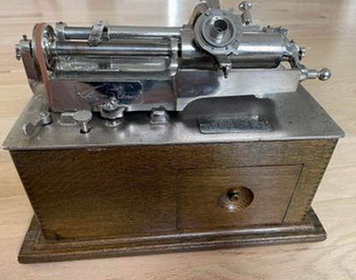
Factory nickel plated Edison Spring Motor.
The David Lundin Collection
|
|
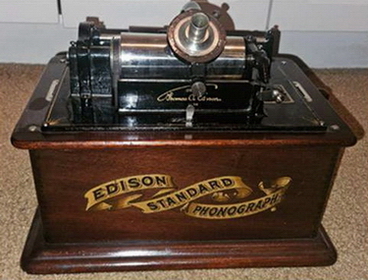
Edison Standard Model B in Mahogany.
The Scott Malawski Collection
|
|
The Model B Triumph (which left the factory in March/
April 1907 or thereabouts) from my collection had
many upgrades over time that were not all available at
the time of purchase. Originally, the machine would
have simply been offered beginning in 1906 with a 14-inch horn, Model C reproducer, and camel hair chip
brush, in addition to the optional upgrades of nickel-plated hardware, repeater, and mahogany cabinet. As
upgrades became available, the original owner would
have later added the spruce Music Master horn, combination 2/4 minute attachment (allowing play of both
types), and Model K reproducer, keeping up with the
quickly changing technology. Clearly, the owner would
have had discretionary income and had thoroughly enjoyed playing their machine and some owners made
such investments and upgrades over time instead of
buying an entirely new phonograph.
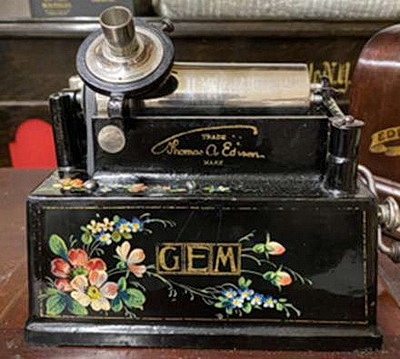
Special decorated Edison Gem Model B in Mahogany case.
The late Domenic DiBernardo collection
|
|
Another example, this special Edison Spring Motor machine from my collection is factory nickel plated, of
which only a few surviving examples are known today.
The machine was acquired from an antique radio collector in Uruguay (of all places), who purchased it from
an estate sale of a former expat there. I was lucky
enough to see his post on Facebook, and we corresponded for a few weeks (although we are still in touch
regularly). At first, I helped him with details and repair
advice, but then he decided to sell the machine, and I
eagerly made an offer and (quite) anxiously awaited
the shipment from across the world. Amazingly, as of
this writing there are also at least 2 known examples of
Edison Spring Motors in mahogany cabinets, but no
mention has been found of that offering in an Edison
Catalog. Perhaps they were a dealer option or very special order from an affluent client, but as of this writing
it is unknown. Other early machines, particularly the
banner “A” versions of the Home and Triumph or the
banner “B” Standard (as pictured from the collection of Scott Malawski) are very scarce in mahogany.
While later mahogany Edison Homes and Standards
are more readily found (still scarce in comparison to
oak), I’ve always been intrigued with seeing lower-cost
machines such as the Edison mahogany-cased Gem
with special decorations (as pictured from the collection of the late Domenic DiBernardo). The mahogany
cabinet would have cost the buyer $2 and the special
decoration was $4 while the base price of the Gem
was $10. It is perplexing that someone would have
chosen the lowest cost utility-grade Edison machine to
upgrade in such a manner. Of course, this is also what
makes such machines incredibly rare. The example
shown is the only documented survivor to date.
Today, these machines with special options, depending
on their configuration, can be as elusive as “hen’s
teeth” to track down, and will often command a premium price unless found “in the wild” through a stroke of great fortune. For me, I will continue to work to hunt for them to add interest to my own collection, and I always appreciate admiring them in the collections of my fellow collectors.
|
|
|
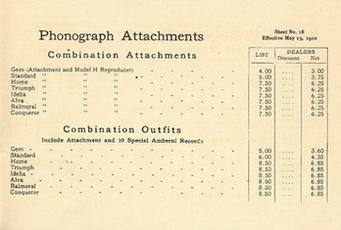
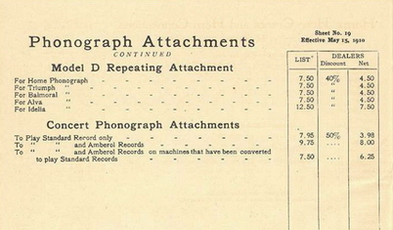
Pricelists for phonograph attachments, May 1910
|
|
|