In 1893, John K. Stewart and
Thomas Clark started manufacturing drive-shafts,
sheep shears, horse clippers, and bicycle
handle-bars in Chicago. Then they expanded to
speedometers for Model T Fords. They bought the
Warner company in 1912, and by 1916 Stewart, who
loved music, had established a phonograph factory
in Chicago. A trademark was filed for the Stewart
Phonograph Corp at 2827 N. Lincoln St., Chicago,
Il., November, 1916 (R. J. Wakeman).
Talking Machine World, April 1919, p.109. "The Stewart Phonograph Corporation, Limted, capital $40,000, with head office in Toronto, plans to manufacture and deal in talking mchines."
Canadian Furniture World and the Undertaker, May 1919, p. 38: "STEWART PHONOGRAPHS MADE IN CANADA -- Mr. H. G. Shaver is sales manager of the Stewart Phonograph Corporation. Ltd., Toronto, a concern that has acquired all the patents, copyrights and manufacturing equipment from the Stewart Phonograph Corporation, Chicago, and is now manufacturing in Toronto this phonograph with several important improvements. This phonograph has had a phenomenal sale in the United States, the demand at all times, it is said, exceeding the supply. The Canadian corporation is appointing agents, and their plant at 384 Pape Ave.. Toronto, is large enough to take care of all demands made upon it."
Stewarts were manufactured in Toronto as
well as in Chicago. A corporate file at the
Ontario Provincial Companies Branch indicates
there was a separate Canadian company established
in Ontario. The pamphlet included with this
Stewart shows a Toronto address, probably for the
showrooms at 1110 Temple Building, erected in 1896
at Richmond and Bay Street, one of the first large
skyscrapers built for the Independent Order of
Foresters. There are ads for Stewart in Eaton’s
catalogues of 1919, 1920, and 1921. Another ad
appeared in the Toronto Daily Star, May 10, 1920
showing an asking price of $15.00.
The 1920 Might's City Directory
shows Stewart Phonographs as distributors, on
Pape Ave. Theodore Vatcher was manager at Pape
Ave. in 1922, and Earl M. Jones, manager in
1923. "During these years the firm used the
premises of W. H. Banfield & Sons Ltd.,
manufacturers of lighting fixtures and
phonograph motors, 370-386 Pape Ave." (Letter
from Toronto City Clerk answering George Wonch,
Aug. 30, 1966; courtesy Horst Weggler).
Talking Machine World, January 15, 1920: "W. H. Banfield & Sons, Ltd., is now working at top speed on motors and talking machines. This firm is also producing, under contract, the Stewart phonograph. Here again is a remarkable example of Canadian development in the direction of big business. The Stewart Phonograph Corp., Ltd., a purely Canadian company,
has purchased outright the world rights of the Stewart Phonograph. Toronto must benefit by the acquisition of an industry of this magnitude."
The Globe, Sept. 1, 1920,
p. 11 stated that Banfield purchased an entire
plant from the U.S. and moved it to Toronto. In
1916, during WWI, Banfield made fuses and
munitions, and by 1929 they consolidated three
electrical equipment companies making switches,
outlet boxes, and wiring (Toronto Star, March
20, 1929, p. 13).
Talking Machine World, February 1922, p. 45: In a twist to the usual flow of trade goods "Model C Stewart phonographs, imported from W. H. Banfield &: Sons, Ltd. of Toronto, Canada, and entered at Chicago, were the subject of a reappraisemeut ruling handed down recently by Judge Sullivan, of the Board of United States General Appraisers. They were invoiced
and entered at Canadian dollars, $5 each, less 2 per cent, plus 1 per mil excise tax, packing included. They were appraised and are now re-appraised at $8.50 net, excise tax included."
The company later became
Stewart-Warner and continued to make
televisions, radios, and speakers.
Stewart-Warner speedometers were also sold in
Toronto (265 Church St.) and across Canada
[Pamphlet in the authors’ collection].
The Windsor Main Spring
catalogue lists a spring suitable for Stewart at
1 x 0.025 inches x 9 feet, with pear-shaped
holes at 50 cents.
See Keith Wright article in Antique Phonograph News, May-June, 2015: http://www.capsnews.org/apn2015-3.htm.
See also the Stewart entry from "Portable Pastimes" by Betty Minaker Pratt and Bill Pratt in Antique Phonograph News Nov-Dec 2007: http://capsnews.org/apn2007-6.htm#stewart
See also the Oro-tone page.
Betty found this Banfield letter head in 2014 (courtesy Bill and Betty Pratt collection):

Cheryl Wright found the following photo of 370 Pape ("Pope"[sic]) circa 1917 at http://www.british-immigrants-in-montreal.com/w-h-banfield.html

Presto, December 16, 1922 pg. 21:

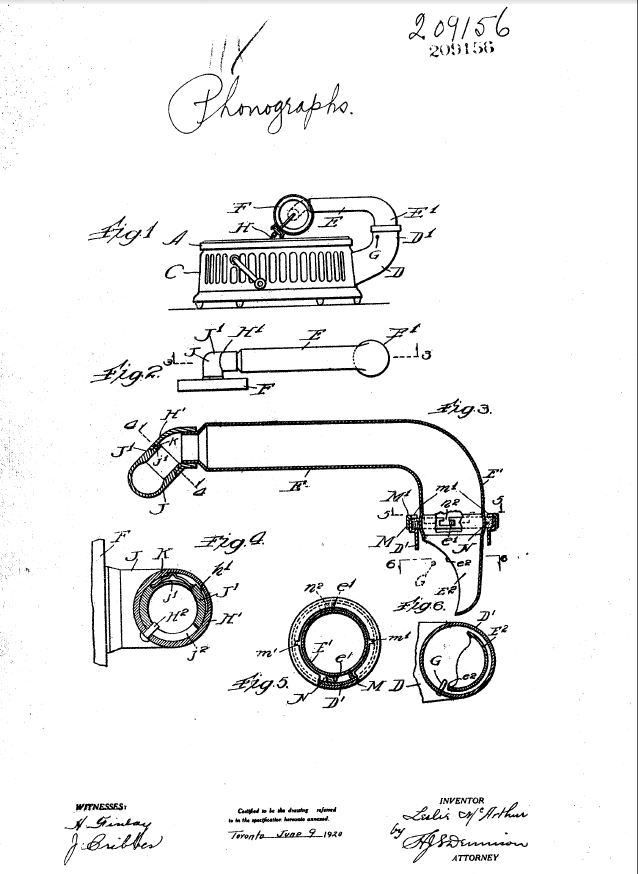
There is a Canadian patent from 1921 under the name "Harry Sommerville Banfield" (H.S. from the letter head?) which has a drawing that looks like the Stewart.

Talking Machine World, April 1919, p.53. Announcement to the music trade that the Stewart phonograph would be manufactured in Canada.
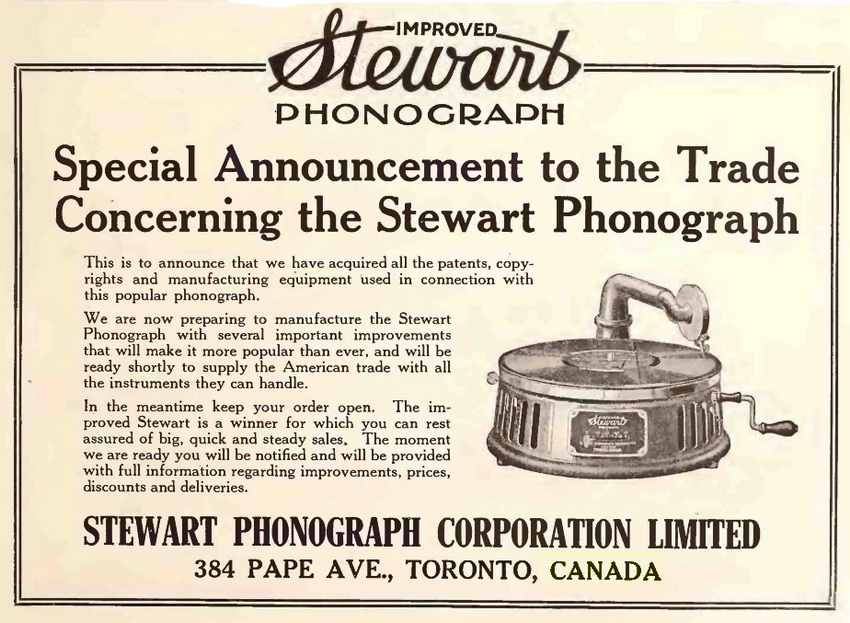
Canadian Music Trades Journal, May, 1919, p. 78:

Farmer's Magazine, 1920:

Toronto Daily Star April 26, 1920 pg. 6

Morning Leader May 22, 1920:

Vancouver Sun June 20, 1920, p. 36. "The Stewart Phonograph is made in Canada".

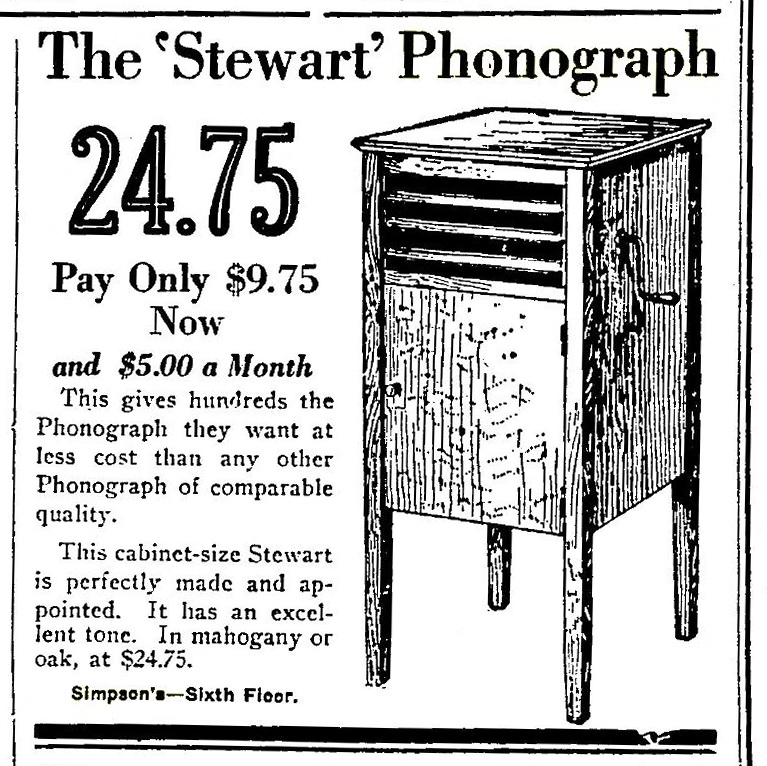
The Stewart phonograph was advertised extensively by Simpson's department store in its catalogue and in advertisements in Toronto newspapers. This is a Simpson's ad in the Toronto Daily Star, April 12, 1920, p. 24. Note: "The Stewart Phonograph is made in Canada".

Another Simpson's ad in the Toronto Daily Star, May 17, 1921, p. 11.

Stewart was still advertising its portable as late as 1926 in the Eaton's Catalog.

Their ad in the Toronto Daily Star, April 2, 1923, p. 15, was not for the portable Stewart but for a small, inexpensive upright phonograph that I would not have connected to the Stewart company.
An upright Stewart phonograph in Woodstock, Ontario for sale on Facebook Marketplace in October 2023. Photo submitted by Steve Redman.


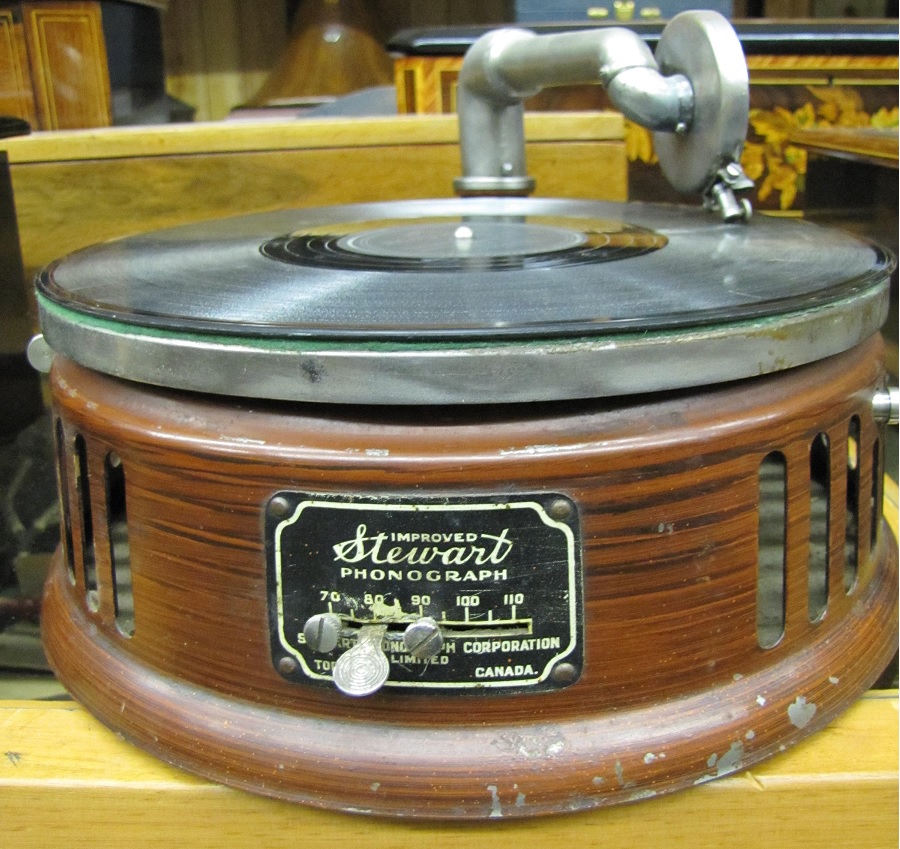
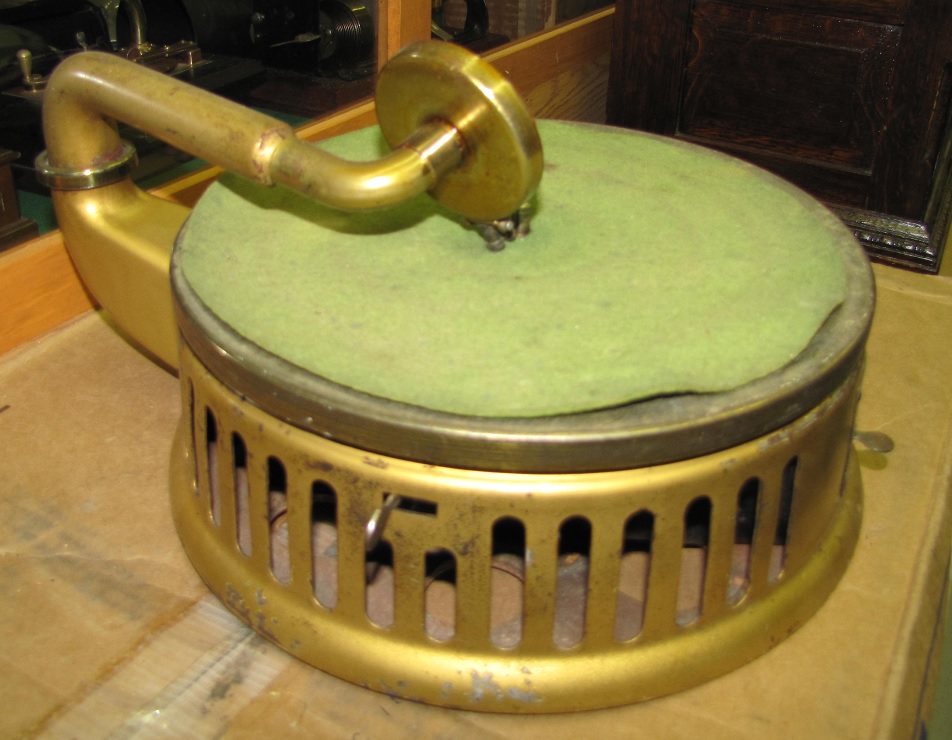
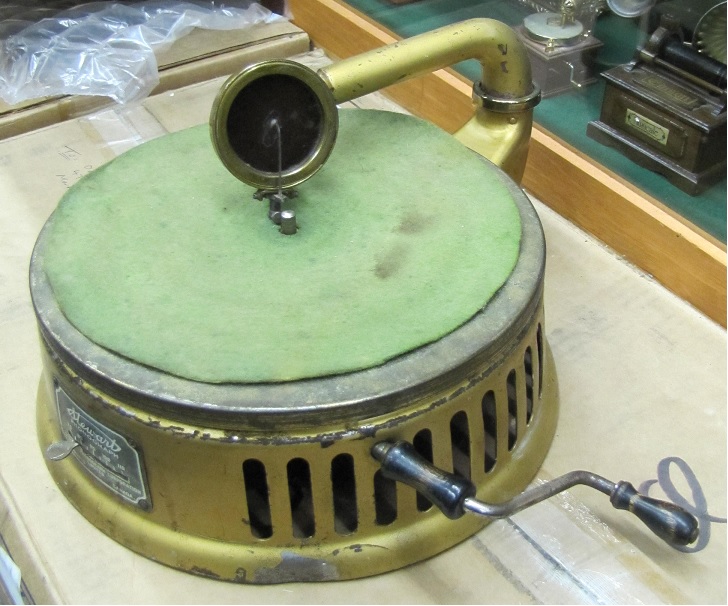
Two machines from the collection of Domenic Di Bernardo (pics by Cheryl Wright)--one the usual fake wood finish, the other in gold. Labelled "Stewart Phonograph Corp. Ltd Toronto Canada" this is a mahogany-lithographed tin-plate model with a carrying case. On top were nickel trimmings. It has a single-spring motor, a 10-inch turntable and can play two records with one winding. The reproducer pivots forward to play vertical-cut discs. Mike Bryan believes the mahogany case was typical of those made in Toronto, whereas the green or cream probably came from Chicago. Domenic Dibernardo has a gold-coloured case.



A Banfield phonograph motor, Type BA2.


In December, 2018 I bought a cleaner Canadian version! I also took a picture at the Banfield sight. Below I have also added a recording of the machine!!!!


Click here to hear and see this machine: https://www.youtube.com/watch?v=Gd7hFq2Gs_c&t=28s